

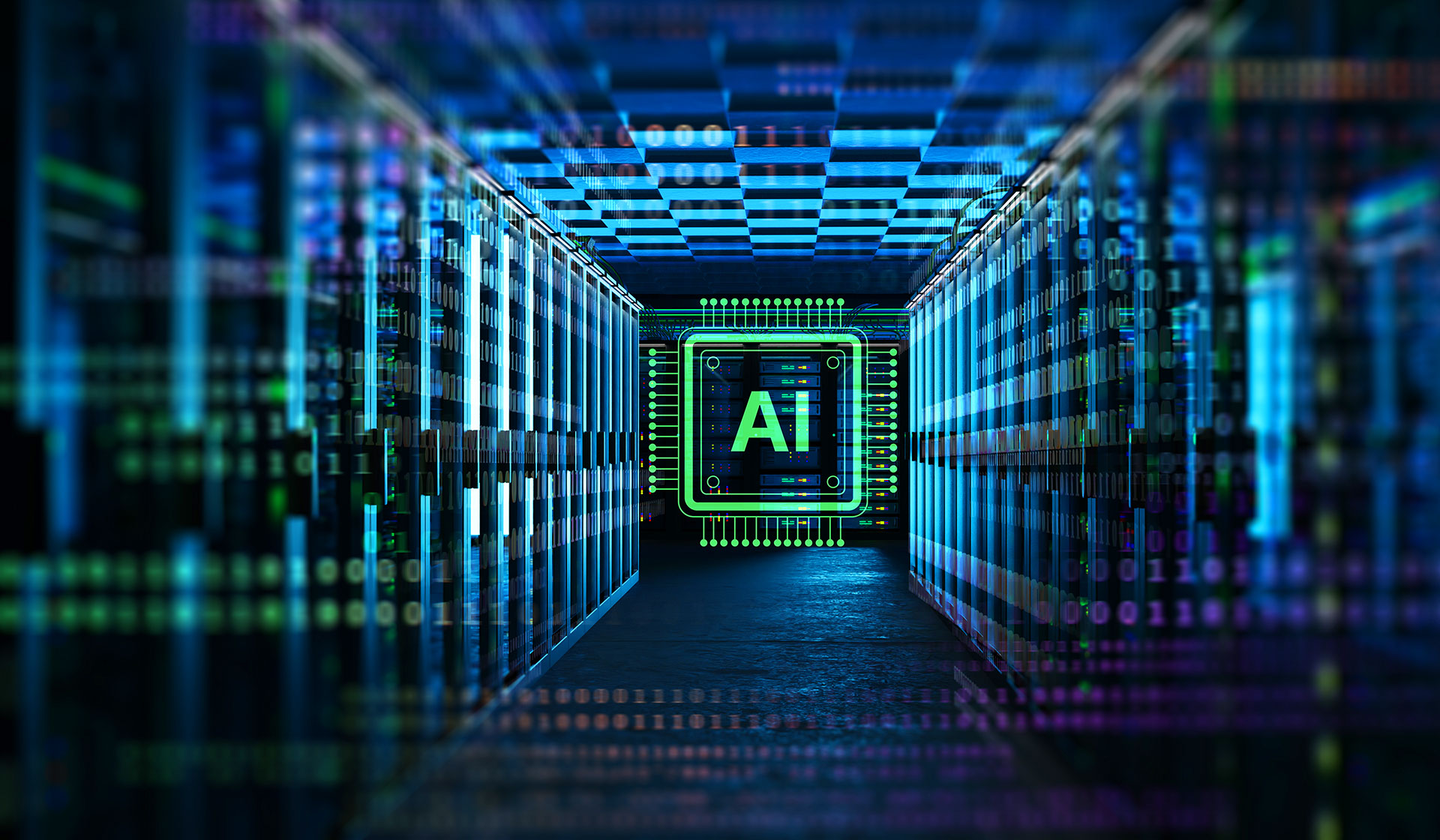
AI Ready Data Center: Essential Infrastructure for Modern Machine Learning Workloads
The rapid evolution of artificial intelligence has fundamentally transformed how we think about data center infrastructure. As organizations race to deploy machine learning models and AI workloads at scale, traditional data centers are proving inadequate for the computational demands of modern AI applications. Enter the AI ready data center – a revolutionary approach to infrastructure design that prioritizes massive parallel processing, advanced cooling systems, and unprecedented power density to support the next generation of intelligent applications.
What Makes a Data Center AI Ready?
An AI ready data center represents a fundamental shift from conventional IT infrastructure. These facilities are specifically engineered to handle the intensive computational requirements of training and deploying artificial intelligence models, which can require thousands of times more processing power than traditional enterprise applications.
The core differentiator lies in the hardware architecture. While traditional data centers might allocate 5-10 kW per rack, AI-optimized facilities routinely support 30-50 kW or even higher power densities per rack. This dramatic increase stems from the need to house high-performance GPUs and specialized AI accelerators that generate substantial heat while performing billions of calculations per second.
Beyond raw power, these facilities implement sophisticated networking architectures with ultra-low latency interconnects. Technologies like InfiniBand and high-speed Ethernet fabrics ensure that distributed AI workloads can communicate efficiently across thousands of processing units without creating bottlenecks that would slow down model training or inference.
Critical Infrastructure Components for AI Workloads
Advanced Cooling Systems
The thermal management challenges in an AI ready data center extend far beyond traditional air cooling approaches. Modern AI infrastructure generates heat densities that would overwhelm conventional cooling systems, necessitating innovative solutions.
- Liquid cooling systems: Direct-to-chip liquid cooling can remove heat 1000x more efficiently than air, making it essential for high-density GPU clusters
- Immersion cooling: Some facilities submerge entire server racks in dielectric fluid, achieving unprecedented cooling efficiency
- Hot aisle/cold aisle containment: Advanced airflow management prevents hot and cold air mixing, optimizing cooling efficiency even in hybrid environments
- AI-driven cooling optimization: Machine learning algorithms dynamically adjust cooling parameters based on real-time workload demands
Power Infrastructure and Redundancy
The power requirements for AI workloads dwarf those of traditional computing environments. A single large language model training run can consume as much electricity as hundreds of homes use in a year. This reality demands robust power infrastructure with multiple layers of redundancy.
Modern AI data centers implement N+1 or even 2N redundancy for critical power systems, ensuring that GPU clusters never experience interruptions that could corrupt weeks or months of training progress. Uninterruptible power supplies (UPS) must be sized not just for capacity but also for the rapid power fluctuations that occur when AI workloads suddenly spike or shift between training phases.
Key Consideration: Power Usage Effectiveness (PUE) becomes even more critical in AI environments. Leading AI ready data centers achieve PUE ratios below 1.2, meaning that for every watt used by IT equipment, only 0.2 additional watts are needed for cooling and other overhead.
Storage Architecture for AI Ready Data Centers
The storage requirements for artificial intelligence workloads present unique challenges that traditional SAN and NAS solutions cannot adequately address. Training datasets can range from terabytes to petabytes, and the system must feed this data to hungry GPUs without creating bottlenecks.
High-Performance Storage Solutions
AI ready data centers typically implement parallel file systems like Lustre or IBM Spectrum Scale that can deliver hundreds of gigabytes per second of sustained throughput. These systems distribute data across multiple storage nodes, allowing thousands of GPUs to access training data simultaneously without competing for resources.
NVMe over Fabrics (NVMe-oF) has emerged as a critical technology, extending the low latency of NVMe drives across the network fabric. This enables compute nodes to access remote storage with near-local performance, essential for checkpointing large models and managing distributed training workflows.
Data Lifecycle Management
Effective data management in an AI environment requires intelligent tiering strategies:
- Hot tier: Ultra-fast NVMe SSDs for active training data and model checkpoints
- Warm tier: High-capacity SSDs or fast HDDs for recent datasets and validation data
- Cold tier: Object storage or tape archives for long-term dataset preservation and compliance
- Edge caching: Strategic placement of frequently accessed data closer to compute resources
Networking Requirements for AI Infrastructure
The networking backbone of an AI ready data center must support unprecedented levels of east-west traffic as distributed training jobs synchronize gradients across hundreds or thousands of GPUs. This communication pattern differs dramatically from traditional north-south traffic flows in conventional data centers.
Understanding these unique networking demands is crucial for architects designing AI infrastructure. The bandwidth requirements for distributed AI training can be orders of magnitude higher than traditional workloads, as AI infrastructure requirements differ fundamentally from traditional computing paradigms in terms of data movement patterns, latency sensitivity, and the need for specialized interconnects that can handle the massive parameter synchronization required during model training.
Modern AI clusters often implement dedicated high-speed fabrics exclusively for GPU-to-GPU communication, separate from the traditional Ethernet network used for management and storage traffic. Technologies like NVIDIA’s NVLink and NVSwitch create dedicated highways for AI workloads, enabling near-linear scaling as more GPUs are added to training clusters.
Security and Compliance Considerations
Data Protection and Privacy
AI ready data centers must implement comprehensive security measures to protect valuable training data and proprietary models. This includes encryption at rest and in transit, secure key management, and robust access controls that prevent unauthorized access to sensitive datasets or model parameters.
Multi-tenancy introduces additional complexity, requiring strong isolation between different customers’ AI workloads. Technologies like confidential computing and secure enclaves ensure that even privileged administrators cannot access customer data or models during processing.
Regulatory Compliance
As AI systems increasingly process sensitive data, compliance with regulations like GDPR, HIPAA, and emerging AI-specific legislation becomes paramount. AI ready data centers must provide:
- Audit trails: Complete logging of all data access and model training activities
- Data residency controls: Ability to restrict data and processing to specific geographic regions
- Model governance: Tools for tracking model versions, training data, and deployment history
- Bias monitoring: Infrastructure for detecting and documenting potential algorithmic bias
Environmental Sustainability in AI Data Centers
The massive energy consumption of AI workloads has raised important questions about environmental sustainability. Progressive AI ready data centers are addressing these concerns through innovative approaches to energy efficiency and renewable power sourcing.
Some facilities are strategically located near renewable energy sources, utilizing hydroelectric, wind, or solar power to offset their carbon footprint. Others implement advanced heat recovery systems, using waste heat from servers to warm nearby buildings or support industrial processes, turning a liability into an asset.
Water usage for cooling presents another sustainability challenge. Next-generation facilities are exploring closed-loop cooling systems and air-cooled designs that minimize or eliminate water consumption, particularly important in water-scarce regions.
Sustainability Tip: Leading AI data centers are achieving net-zero carbon emissions through a combination of renewable energy procurement, improved efficiency, and carbon offset programs.
Cost Optimization Strategies
Building and operating an AI ready data center requires substantial capital investment, making cost optimization crucial for long-term viability. Smart operators employ various strategies to maximize return on investment while maintaining performance.
Workload Scheduling and Resource Allocation
Intelligent scheduling systems can dramatically improve utilization rates by:
- Batch scheduling: Grouping similar workloads to minimize context switching overhead
- Spot pricing models: Offering discounted rates for interruptible workloads during off-peak hours
- Dynamic resource allocation: Automatically scaling resources based on workload demands
- Multi-tenancy optimization: Safely sharing GPU resources across multiple smaller workloads
Hardware Lifecycle Management
The rapid pace of AI hardware innovation means that today’s cutting-edge GPU might be obsolete in 18-24 months. Successful AI data centers implement flexible procurement strategies, including leasing options and regular refresh cycles that balance performance gains against capital expenditure.
Future Trends in AI Ready Data Centers
The evolution of AI ready data centers continues to accelerate, driven by breakthrough technologies and changing workload requirements. Quantum-classical hybrid systems are beginning to emerge, requiring entirely new infrastructure paradigms that can support both traditional and quantum processing units.
Edge AI is pushing intelligence closer to data sources, creating demand for smaller, distributed AI-capable facilities that can process data locally while maintaining connectivity to centralized training infrastructure. This distributed model requires sophisticated orchestration and management tools that can coordinate workloads across multiple sites.
Neuromorphic computing and other alternative AI architectures promise to deliver order-of-magnitude improvements in efficiency for specific workload types. Forward-thinking data centers are already planning for infrastructure that can accommodate these emerging technologies alongside traditional GPU-based systems.
Selecting the Right AI Data Center Partner
Organizations evaluating AI data center options should consider multiple factors beyond raw computational capacity:
- Technology roadmap alignment: Does the provider regularly update hardware to match your evolving needs?
- Support expertise: Can they provide guidance on optimizing your specific AI workloads?
- Ecosystem integration: How well do they integrate with your existing cloud and on-premises infrastructure?
- Financial flexibility: Do they offer consumption-based pricing models that align with your budget?
- Geographic presence: Can they support your data residency and latency requirements?
The transformation to an AI ready data center represents more than just upgraded hardware; it’s a fundamental reimagining of how computational infrastructure supports the intelligence revolution. As AI continues to permeate every industry and application, these specialized facilities will become the foundation upon which our AI-powered future is built. Organizations that understand and embrace these infrastructure requirements today will be best positioned to leverage AI’s transformative potential tomorrow, while those that delay risk being left behind in an increasingly intelligent world.