

How to Design a Data Center: Complete Infrastructure Planning Guide
Designing a data center is one of the most critical infrastructure decisions modern organizations face, requiring careful planning across multiple dimensions, including power systems, cooling infrastructure, network architecture, and security protocols. Whether you’re building a small edge facility or a hyperscale campus, the design choices you make today will impact your operational efficiency, scalability, and total cost of ownership for decades to come.
Core Components to Design a Data Center
Every successful data center design begins with understanding the fundamental building blocks that work together to create a reliable, efficient facility. These components must be carefully selected and integrated to meet both current needs and future growth requirements.
Power Infrastructure and Distribution
The electrical system forms the backbone of any data center design, typically accounting for 40-60% of the total infrastructure cost. Your power design must include utility feeds, automatic transfer switches, uninterruptible power supply (UPS) systems, and power distribution units (PDUs). Most modern facilities implement N+1 or 2N redundancy configurations to ensure continuous operations during equipment failures or maintenance windows.
Critical power planning involves calculating your total IT load, factoring in growth projections, and adding overhead for cooling and auxiliary systems. Industry best practices recommend designing for a power usage effectiveness (PUE) below 1.5, though leading-edge facilities now achieve ratios as low as 1.1 through innovative distribution architectures.
Cooling and Environmental Controls
Thermal management represents the second-largest operational expense in most data centers. Modern cooling designs have evolved beyond traditional computer room air conditioning (CRAC) units to include more efficient solutions like in-row cooling, rear-door heat exchangers, and direct liquid cooling for high-density deployments.
The choice of cooling technology directly impacts your facility’s energy efficiency and capacity limits. Air-based systems typically support rack densities up to 15-20kW, while liquid cooling can handle 50kW or more per rack, making it essential for AI and high-performance computing workloads.
Strategic Planning When You Design a Data Center
Successful data center design requires alignment between technical requirements and business objectives. This strategic planning phase determines not just what you build, but how it will adapt to changing demands over time. Understanding how data center infrastructure decisions directly impact business growth potential helps organizations avoid costly mistakes and ensure their facility investments deliver maximum value throughout the operational lifecycle.
Capacity Planning and Scalability
Right-sizing your initial deployment while maintaining expansion flexibility requires careful analysis of growth patterns and technology trends. Modular design approaches allow you to build in phases, deploying capital more efficiently while maintaining the ability to scale up as demand increases.
Consider implementing a pod-based architecture where standardized modules can be replicated as needed. This approach simplifies capacity planning, reduces deployment timelines, and ensures consistent performance across your expanding footprint.
Location Selection Criteria
Site selection significantly impacts both capital expenditure and operational costs. Key factors to evaluate include:
- Proximity to fiber optic networks and carrier hotels for connectivity options
- Access to reliable, cost-effective power sources, including renewable energy
- Environmental risk factors such as flooding, earthquakes, and extreme weather
- Local regulations, tax incentives, and permitting requirements
- Availability of skilled technical workforce for operations and maintenance
- Distance from primary user populations to minimize network latency
Network Architecture and Connectivity Design
The network infrastructure you design determines application performance, user experience, and operational flexibility. Modern data centers require robust, scalable networking that can support everything from traditional enterprise applications to cloud-native microservices and edge computing workloads.
Structured Cabling Systems
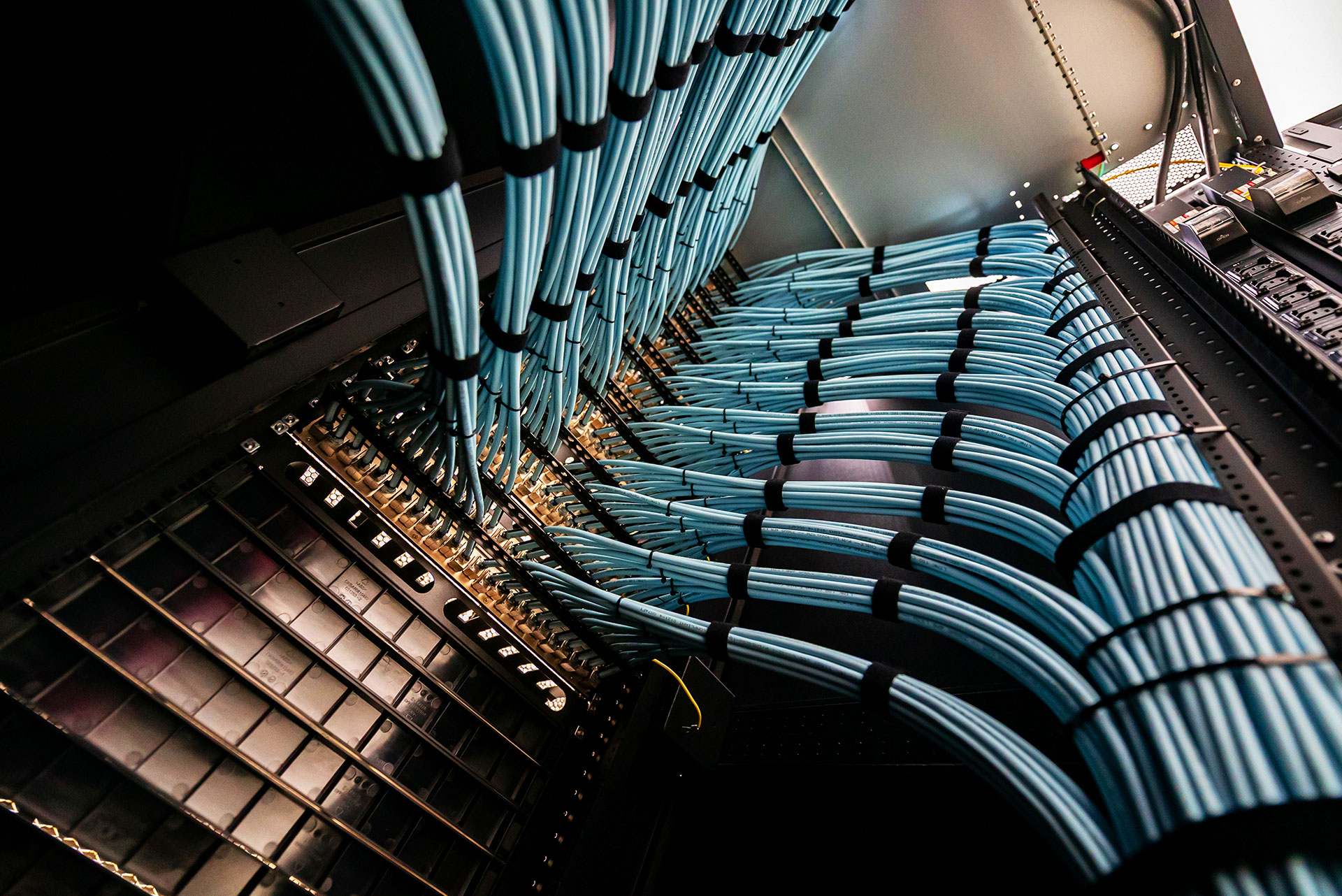
A well-designed structured cabling system provides the physical foundation for all network communications. Plan for both current bandwidth requirements and future upgrades by installing higher-category cabling than immediately necessary. Consider fiber optic infrastructure for backbone connections and high-bandwidth applications, while using copper cabling for shorter runs and power-over-Ethernet applications.
Cable management becomes increasingly critical as density increases. Implement clear labeling standards, maintain detailed documentation, and use cable trays and pathways that allow for easy maintenance and upgrades without disrupting operations.
Software-Defined Networking Integration
Software-defined networking (SDN) and network function virtualization (NFV) technologies enable more agile, programmable infrastructure. These approaches separate the control plane from the data plane, allowing for centralized management, automated provisioning, and dynamic resource allocation based on application requirements.
Design Tip: Implement a spine-leaf network topology for better scalability and reduced latency compared to traditional three-tier architectures. This design provides consistent hop counts and eliminates bottlenecks as you scale horizontally.
Security Considerations in Data Center Design
Security must be embedded throughout the design process, not added as an afterthought. A comprehensive security strategy addresses both physical and cyber threats through multiple layers of protection.
Physical Security Measures
Physical security begins at the perimeter with fencing, gates, and surveillance systems. Design entry points with man-traps, biometric access controls, and visitor management systems. Within the facility, implement cage or cabinet-level locking systems and monitor all access with audit trails.
Consider the placement of critical infrastructure components to minimize vulnerability. Locate generators, fuel tanks, and cooling equipment in secure areas protected from both intentional attacks and accidental damage.
Cybersecurity Infrastructure
Network segmentation through VLANs and microsegmentation limits the potential impact of security breaches. Deploy next-generation firewalls, intrusion detection systems, and security information and event management (SIEM) platforms to monitor and respond to threats in real-time.
Design your infrastructure to support zero-trust security models, where every connection requires verification regardless of its origin. This approach becomes especially important as hybrid cloud deployments blur the traditional network perimeter.
Energy Efficiency and Sustainability Strategies
Environmental responsibility and operational efficiency converge in modern data center design. Implementing sustainable practices reduces both environmental impact and operational costs while potentially qualifying for green building certifications and tax incentives.
Renewable Energy Integration
Incorporating renewable energy sources like solar panels or wind turbines can significantly reduce grid dependence and carbon footprint. Design electrical systems to seamlessly integrate renewable sources with traditional grid power, using battery energy storage systems (BESS) to smooth supply variations.
Power purchase agreements (PPAs) with renewable energy providers offer another path to sustainability without the capital investment of on-site generation. Consider locations with access to renewable energy markets when selecting sites for new facilities.
Waste Heat Recovery and Reuse
Data centers generate substantial waste heat that can be captured and repurposed. Design considerations for heat recovery include:
- District heating systems for nearby buildings or communities
- Agricultural applications such as greenhouse heating or aquaculture
- Industrial processes requiring low-grade heat
- Absorption cooling systems that convert waste heat back into cooling capacity
Monitoring and Management Systems
Comprehensive monitoring capabilities enable proactive management and optimization of data center resources. Design your facility with extensive sensor networks and management platforms that provide real-time visibility into all critical systems.
DCIM Platform Integration
Data Center Infrastructure Management (DCIM) software consolidates monitoring and control across IT and facilities systems. When you design a data center with DCIM integration from the start, you enable better capacity planning, energy optimization, and predictive maintenance capabilities.
Select DCIM platforms that offer open APIs and support for industry-standard protocols to ensure interoperability with existing and future systems. This flexibility becomes crucial as you integrate new technologies and expand operations.
Environmental Monitoring
Deploy environmental sensors throughout the facility to track temperature, humidity, airflow, and water detection. Modern sensor networks can identify hot spots, optimize cooling distribution, and predict equipment failures before they impact operations.
Consider implementing computational fluid dynamics (CFD) modeling to visualize and optimize airflow patterns. This analysis helps identify design improvements that enhance cooling efficiency and eliminate thermal bottlenecks.
Future-Proofing Your Data Center Design
Technology evolution accelerates constantly, making flexibility and adaptability essential design principles. Future-proofing strategies help ensure your facility remains relevant and competitive as requirements change.
Edge Computing Readiness
The growth of edge computing drives demand for smaller, distributed facilities closer to end users. Design modular, repeatable architectures that can be deployed at edge locations while maintaining consistent management and operations.
Consider prefabricated modular data centers for rapid edge deployments. These solutions offer predictable performance, reduced construction time, and the flexibility to relocate assets as requirements evolve.
Artificial Intelligence and High-Density Computing
AI and machine learning workloads require significantly higher power and cooling capacity than traditional IT equipment. Design infrastructure with the flexibility to support mixed densities, potentially incorporating liquid cooling capabilities even if not immediately required.
Plan electrical and mechanical systems with sufficient headroom to accommodate density increases without major retrofits. This might include oversizing power feeds, installing additional cooling capacity, or roughing in liquid cooling piping for future activation.
Designing a data center successfully requires balancing numerous technical, operational, and business considerations while maintaining focus on long-term objectives. By addressing power, cooling, networking, security, and sustainability holistically, organizations can create facilities that not only meet immediate needs but also adapt gracefully to future challenges. The key lies in thoughtful planning, modular approaches, and maintaining flexibility throughout the design process to ensure your data center infrastructure continues delivering value as technology and business requirements evolve.